Thursday, June 11, 2009

9/11 Cover Up Arbitrator, Kenneth Feinberg, Named as Latest Obama Czar


http://cache.daylife.com/imageserve/0bcKePUeTFbs5/340x.jpg "One more time"

http://pilotsfor911truth.org/forum/index.php?showtopic=18405

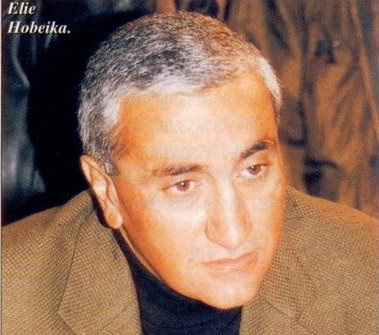
Obama's latest 'czar' is Kenneth Feinberg.
WASHINGTON — The Obama administration on Wednesday appointed a compensation czar who will have broad discretion to set the pay for 175 top executives at seven of the nation’s largest companies, which received hundreds of billions of dollars in federal assistance to survive.

Instead of deciding compensation levels himself, the Treasury secretary, Timothy F. Geithner, decided to appoint Mr. Feinberg, a well-known mediator whose last high-profile assignment was putting a financial value on the lives of victims of the 9/11 attack, to decide the pay for the top 25 executives at the American International Group, Citibank, Chrysler, Chrysler Credit, General Motors, GMAC and Bank of America. {more}

Feinberg was appointed by the Bush administration as 'Special Master' of the September 11 Victim Compensation Fund.

The part not being told is that Feinberg was tasked with not allowing any of the victims families to go to court where possible incriminating evidence might interfere with the 'official' story and cover up.

In that respect, he was successful. No case has gone to court.
Feinberg selected dual US/Israel citizen and Judge Alvin Hellerstein as the sole judge to handle all of the victims’ cases against the airlines and security companies (most of which were Israeli owned) and against any potential government suits. To date, no victims' family has been able to sue the government, airlines or security companies. {more}

See: The Zionist Obstruction of Justice for 9-11 Victims
and...
The 9/11 Victim Compensation Fund: cui bono?


Feinberg was also one of three arbitrators selected to determine the fair market value of the original Zapruder film of the Kennedy assassination and was one of two arbitrators selected to determine the allocation of legal fees in the Holocaust slave labor litigation.

In that holocaust shake down scam, Feinberg awarded his jewish lawyer peers some serious coin.

Lawyers who represent Nazi-era slave laborers split more than $52 million in legal fees yesterday for work on a case that will bring Holocaust victims $5,000 to $7,500 each.

Eleven lawyers were awarded more than $1 million each, with the biggest share, $6.3 million, going to Melvyn I. Weiss of the Manhattan law firm Milberg Weiss Bershad Hynes & Lerach. Michael D. Hausfeld of Washington was given $5 million, and Burt Neuborne, a professor at the New York University Law School, was awarded $4.4 million.

The lawyers, 51 in all, were involved in a variety of suits filed on behalf of people forced to work by the Third Reich. Most victims are in their 70's or 80's. Many have died without receiving any money in the year since German industry and the German government set up a $4.5 billion fund to pay reparations. In return, the companies wanted assurances that they would be free of any future claims by Holocaust victims. {more}

Feinberg's wife Dede is a past president of the Jewish Federation of Greater Washington, currently serves on the Executive Committees of UJC and United Israel Appeal and is a member of the Board of Governors of the Jewish Agency for Israel.

A husband and wife team for jewish interests and zionist Israel. How sweet.

UJC/Jewish Federations of North America is pleased to announce that Dede (Diane) Shaff Feinberg and Kenneth Feinberg of Bethesda, MD will co-chair the 2009 General Assembly (GA) Nov. 8-11 in Washington, DC. The GA is one of the largest and most influential gatherings of Jewish leadership in the world.{more}
The Kenneth Feinberg Group is listed as one of the top 10 supporters of the Jerusalem Institute for Israel Studies for 2004-2005. The Jerusalem Institute is an Israel-based Zionist organization that, among other things, supports the building of the illegal separation wall across Palestine.{more}

It sounds as if Feinberg, a dual U.S./Israeli citizen, is the 'perfect' choice for overseeing compensation for the criminal financial organizations of Wall Street. As a cover up artist, he won't let his fellow dual citizens down.

Wednesday, June 10, 2009

The Air Force of the Future


The U.S. Air Force is under growing pressure to build fewer of its next fighter, the F-35. The air force has been ordered to reexamine the future needs for F-35s during the current Quadrennial Defense Review (QDR). This is a planning exercise that takes into account all the nations military and civil resources as applied to a list of potential opponents and in wars that could break out in the next decade. This analysis is used to determine what weapons will be needed in the future. The QDR also has to take into account the "guidance" from the president and Congress. The air force believes that a more optimistic (about world peace) government will provide guidance that indicates a need for fewer F-35s (currently the air force plans to buy 1,763.)

Another problem is that many people, including some generals in the air force, believe that its next generation fighter will not have a pilot on board. Many air force generals admit that the F-35 is probably the last manned fighter. But some believe that the F-35 will be facing stiff competition from pilotless fighters before F-35 production is scheduled to end in 2034.

UAV (unmanned aerial vehicles) are not particularly popular with many U.S. Air Force leaders, but that is not the case in many other countries. Air force generals around the world see the unpiloted jet fighter as a way to break the monopoly the U.S. Air Force has had on air supremacy for the last sixty years. Most Americans don't even think of this long domination of the air, but potential enemies of the United States are well aware of it, and that domination has a profound effect on how those nations do their military planning. In effect, if you think about going to war with the United States, you take for granted that American aircraft will control the skies above. Robotic jet fighters could change that. And this is forcing American air force generals to confront a very unsavory prospect; a sixth generation fighter that is flown by software, not a pilot.

It's not just that most of the those American air force generals began their careers as fighter pilots. No, the reason is more practical. American air superiority has largely been the result of superior pilots. The U.S. didn't always have the best aircraft, but they always had the most talented and resourceful pilots. And that's what gave the U.S. its edge. Will that translate to software piloted fighters? Research to date seems to indicate it will.

Meanwhile, simulations, using fighter flown by software, versus those flown by humans, have been used for over two decades. The "software pilots" have gotten better, and better. Moreover, a fighter without a pilot is more maneuverable (because some maneuvers are too stressful on the human body.) UAV fighters can be smaller, cheaper, stealthier and more expendable. But the key to software pilots is the development of superior tactics, and artificial intelligence (AI) that is more capable than anything your opponent can come up with.

The U.S. Air Force, and several other air forces, have already created fighter pilot software, and now the United States, and Russia, are creating pilotless fighters. Many air force generals are convinced that the pilotless fighters will perform as well for real, as they have in the simulations. So convinced are U.S. Air Force generals, that they are seriously considering a sixth generation fighter that will not carry a human pilot. Otherwise, enemy pilotless fighters would have an edge over the U.S. sixth generation aircraft.

The potential superiority of U.S. pilotless fighters is partly driven by the fact that most American fighter pilots are geeks. Many can create software, and have a deep understanding of the many computers, and their software, that modern aircraft contain. It's the fighter pilots who will play a key role in creating the best "software pilots." Thus the thinking is that American control of the air will be maintained by a new generation combat aircraft controlled by software, not someone in a cockpit.

Holder planning on reversing conviction of Israeli spy Larry Franklin


Holder planning on reversing conviction of Israeli spy Larry Franklin

After Attorney General Eric Holder ordered the dropping of all espionage charges against former American Israel Public Affairs Committee (AIPAC) officials Steve Rosen and Keith Weissman, it now appears likely that their Pentagon source of a number of Top Secret and Top Secret Sensitive Compartmented Information (TS/SCI) documents, convicted former Defense Intelligence Agency (DIA) officer and Army Reserve Lieutenant Colonel Larry Franklin, will also get a sweetheart deal that will see his his 12-year prison sentence commuted.

Franklin's main Mossad contact in Washington during his espionage activities for Israel was Uzi Arad, Prime Minister Binyamin Netanyahu's current National Security Adviser and, officially, a "retired" Mossad officer. The Bush administration barred Arad from entering the United States due to his involvement in the Pentagon spy ring, however, the Obama administration has lifted the travel ban. Arad is now able to freely enter and exit the United States in order to peddle Israeli influence and coordinate further espionage operations aimed at undermining America's opposition to the right-wing extremist and expansionist policies of the Israeli government. Franklin's other Mossad contact was Naor Gilon, whose Mossad official cover was as Minister-Counselor for Political Affairs of the Israeli embassy in Washington. Gilon remains in that position and has not been declared persona non grata for his espionage activities.

WMR has learned from informed sources that the acting U.S. Attorney for the Eastern District of Virginia, Dana J. Boente, who was instrumental in dropping the case against Rosen and Weissman, is now engaged in negotiations with Justice Department lawyers and U.S. Judge for the Eastern District of Virginia T.S. Ellis to hammer out a deal whereby Franklin will not be required to report to a minimum security federal prison in western Maryland and have the $10,000 fine imposed on him vacated.

On May 14, a sealed motion was filed by Boente and her team at the U.S. Court for the Eastern District. The sealed motion simply stated: "SEALED MOTION by USA as to Lawrence Anthony Franklin." A hearing before Ellis on the motion has been scheduled for June 12 at 9:00 am at the U.S. District Court in Alexandria, Virginia.

WMR has reported that Franklin has had a long association with Israeli intelligence and their interlocutors in Washington, DC.

On August 2, 2005, WMR reported: "An on-going criminal investigation in Italy has yielded copies of the minutes of meetings held at the U.S. Embassy in Rome in 1995 attended by a "Colonel Franklin" from the United States, leading Italian neo-Fascist politicians (including Deputy Prime Minister Giancarlo Fini), and Likud officials from Israel. The meetings were held to arrange for lucrative telecommunications and military contracts for Israeli companies with the U.S. government.

Air Force Reserve Colonel, Defense Intelligence Agency (DIA) and Pentagon Bureau of Near East and South Asian Affairs employee Lawrence (Larry) A. Franklin was recently indicted for passing classified information to two American Israel Public Affairs Committee (AIPAC) employees. The top Mossad official at the Israeli embassy in Washington and other Israeli agents are also under investigation by the FBI. Franklin served in the U.S. Air Force Reserves since 1976 and was posted to the DIA and Defense HUMINT Services. While serving his two week active duty stints, Franklin was intermittently posted to the Air Attache office at the U.S. Embassy in Tel Aviv. Franklin, who touted an aggressive military approach against Iran, also reportedly attended a December 2001 meeting in Rome on opening up back channels to Iranian dissidents. Attending the meeting, in addition to Franklin, were leading neo-con Michael Ledeen of the American Enterprise Institute and Karl Rove's chief foreign policy advisor; Pentagon neocon Harold Rhode; Iran-contra figure and known fabricator Manucher Ghorbanifar; Italian SISMI military intelligence chief Nicolo Pollari; Italian Defense Minister Antonio Martino; and a number of Iranian dissidents."

On November 17, 2006, WMR reported: "Federal law enforcement sources report that a senior retired Mossad officer is the subject of a sealed indictment in the Larry Franklin-America Israel Public Affairs Committee (AIPAC) espionage case. The retired officer, a former terrorism adviser to Prime Minister Binyamin Netanyahu, worked under a relatively new type of Israeli intelligence cover in Washington -- association with a think tank, in this case the neo-conservative Hudson Institute." That retired Mossad officer was Uzi Arad, now Netnayahu's top national security adviser.

On August 10, 2006, WMR reported: "Larry Franklin, the Pentagon Office of Special Plans Iran and Defense Intelligence Agency (DIA) analyst and reserve Air Force Lieutenant Colonel who was temporarily posted at the U.S. embassy in Tel Aviv, served as a virtual personal liaison for Defense Secretary Donald Rumsfeld, according to U.S. intelligence sources who have spoken to WMR . . . Although the Pentagon quickly distanced itself from Franklin after his arrest and revelations of the AIPAC-Mossad espionage program, U.S. intelligence sources report that Franklin accompanied Rumsfeld on his May 1, 2003 and February 26, 2004 trips to Kabul, Afghanistan and acted as his personal Pushto and Dari interpreter with Afghan officials. The sources claim that Franklin had a collegial photograph taken of himself with Rumsfeld and Afghan President Hamid Karzai during the Afghan visit. Franklin also speaks Farsi, Urdu, Arabic, and Hebrew. Franklin boasted to his colleagues that he learned the languages from his Pakistani, Afghan, and Iranian colleagues and bosses while working as a tax cab driver in New York City. U.S. intelligence officials also revealed that Franklin repeatedly attempted to recruit other U.S. intelligence personnel to work in a 'NOC' or 'non official cover program.' Later, it was discovered the 'NOC' program was not American but Israeli. The fact that Franklin was so close to Rumsfeld, whose coterie of advisers has been very small and largely non-inclusive of uniformed military personnel, makes Rumsfeld a prime suspect in the AIPAC espionage case and a possible severe national security risk.

How Zionist jews are financing and backing extrem right wing parties in the UK (BNP), France (FN), Germany, Netherland, Italy and Spain


Head of MI5 Jonathan Evans behind BNP's running operation and his puppet and mouthpiece Nick Griffin, on behalf of his masters in Tel Aviv

......Everything you wanted to know about how Zionists control US policy....

Do you see any difference between Zionist war criminals in place Brown, Straw, Miliband... the tories, Zionist Cameron and the BNP ? There are no differences, they are all financed, and bankrolled by Zionist Jews, who are working hard to implement a 'clash of civilization' in Europe. MI5 is BNP, we understand that MI5 wants a civil war against the Muslims in the UK and Europe ? Evans are you going to clarify your position or do you want a new scandal.... ? Up to you !


Right: The next leader of the "free world" is already guaranteed to be a Zionist. Who runs the banking system? Who controls our political parties? Who runs the media? Who rules Hollywood? Who controls Big Business? Hint for BNP members: it ain't "the muzzies."An interesting link (see first link below) here for two reasons.

The fact that John Tyndall, albeit self-induced to some degree, seems to realise that his party was taken over as the result of a conspiracy either controlled or used by the State in the light of government/MI5 statements in the 90s re. attacking and bringing down nationalism.

The feedback to the piece suggests that the BNP has been turned, at least because sections of it are now draping themselves in Stars of David (remember too that Mark Cotterill's false EFP was condemned by the local Green Party for using the Israeli Flag in its electoral campaigning).I was talking recently to European Comrades who used to be confreres with Mr. Griffin, and there is little doubt to them that has been a "turning point" (the whys and wherefores of it can be debated) because it CANNOT be debated that the nationalist movement (represented by the NF in the 70s & 80s and the BNP in the 90s) was avowedly anti-Zionist; whereas today the nationalist movement (represented by the BNP in the 00s) is, at best, now no longer anti-Zionist and, at worst, positively pro-Israel and Neo-Con in language if not in policy per se.

This not hearsay or opinion. This can be evidenced from the material out there and the increasingly Neo-Con nature of the material coming from the BNP, not to mention the Zionist language that comes from certain BNP people who are kept in their positions by the BNP leadership.

Where are the complete and convincing condemnations of Israel?

Where are the complete and convincing condemnations of Zionist power in banking, Hollywood, Big Business, Freemasonry etc.?Of course these do not have to be in election leaflets, of course these do not have to be in headlines, of course these do not have to underpin community actions and activities, etc.But an awareness and an education of militants as to the history of geo-politics and that the real enemy runs our parliament, banks, the City of London, Big Businesses etc. will at least ensure that nationalism isn't used and abused as a Boot Boy of Zionism....

By all means keep the "populist" language in East London, Lancashire, the Black Country etc.But this kow-towing to Israeli policy and Neo-Con language stinks. Furthermore the grassroots of the nationalist movement know it stinks.Left: Neo Con voices on the "right" like Richard Littlejohn (pictured) and Melanie Phillips, as well as the Neo Con voices on the "left" like Nick Cohen and David Aaronovitch, ensure that the people, Labour and Tory voters, see the non-existent "Al Qaeda" as the big threat and not Zionism, Capitalism, American Imperialism, etc.

The BNP can condemn us for being "purists." The BNP can set its freelance attack dogs on us to spread smears. The BNP can close its collective eyes and convince itself that its insistence that Islam is the only enemy or the only evil that we face.

None of this will change the facts.In the early 90s the State announced that it would destroy a nationalism that was anti-Zionist and already had its agents at work.In the 00s we have a "nationalism" that is either ambivalent or even pro-Zionist (NB: even to accept Israel's "right" to exist is to be Zionist) and we can assume that the State agents have played their part.

As the Oriental curse goes: "May you live in interesting times."

We certainly are!

P.S. Those with long memories will remember that the leader of the BNP started his about-turn in BNP policy viz a viz Israel, Zionism etc. with a very interesting, long, fair and courteous feature/interview with David Aaronovitch (in which NG said the BNP was like a super tanker which would take a long time to turn around!).

It has also been helped along with various puff pieces - dressed up as "warnings" from Nick Cohen.

Both Aaronovitch and Cohen are avowed Neo Cons whose main bugbear is "Islamofascism" or "Islamification." In other words the men who have promoted an "Islamophobic" (read Neo Con) BNP are two of the main Zionist Neo Con columnists in Britain whom, it may be assumed by some, could be in the pay of Mossad....

Links:

Iran's elections proof of a vibrant Islamic-Democracy


Iran's elections proof of a vibrant Islamic-Democracy


Iran's colorful and highly contentious presidential election can be expected to prove a major boon for the country's foreign policy, no matter who is voted into office when those among the 46 million eligible voters go to the polls on Friday.

Described by the international media as "extraordinarily open" and "highly competitive", the election process has been internally polarizing and has generated excess public interest that will likely continue once the sound and fury of election euphoria is over. Yet, the net impact with respect to Iran's foreign priorities is bound to be positive.

This is because the polls will give the incoming regime international respectability and legitimacy following a dynamic electoral race that has boiled down to four main candidates.

Mir Hossein Mousavi, a reformist, has emerged as the main
challenger to President Mahmud Ahmadinejad, who is running for another four-year term. Mohsen Rezai represents the main conservative challenge; he is a former head of the Iranian Revolutionary Guards Corps. Mehdi Karroubi is a former parliamentary speaker and comes from the reformist camp.

In international relations, the image of a country and the degree of its attractiveness is shaped by elements such as its domestic politics, culture, values and foreign policies.

In the case of the United States, neo-liberal thinkers such as academic Robert Keohane and Harvard Professor Joseph Nye have been counseling Washington for some time on the necessity of soft power measures to reverse what Nye refers to as "America's declining popularity", such as by shifting from unilateralism to multilateralism and relying on "smart diplomacy".

The same argument applies to Iran, as the presidential race has afforded the critics of Ahmadinejad the unique opportunity to blame him for "adventurism, extremism, impressionism and sloganism", to paraphrase Mousavi.

Karroubi has questioned Ahmadinejad's purported denial of the Holocaust by arguing that "this is not an issue for Iran", while Rezai has offered a detailed, step-by-step plan for detente with the West.

Such open debates on all aspects of Iran's domestic and foreign policies, using, for the first time, the all-too-important medium of television, reflect a maturing Islamic Republic that is in the throes of a qualitative expansion of its public sphere. This political evolution is on full display before the world community.

The ultimate test of the legitimacy of the elections arrives on Friday when an estimated 60% of the electorate goes to the polls. The two reformist candidates have filed objections over the number of ballots printed - they say there are too many. This issue is expected to be resolved, though, and the next president should be able to convince the world that he has a national mandate, which includes continuing with the country's nuclear program and negotiating with other countries.

The United States has over the past few years led the condemnation of Iran for its uranium-enrichment program, which it says could be aimed at developing a nuclear weapon. Tehran claims it has the right in terms of the nuclear Non-Proliferation Treaty, of which it is a signatory, to follow such a program. Iran has been slapped with several rounds of United Nations sanctions as well as unilateral ones from the US for not halting its operations.

According to a number of political analysts in Iran, a more moderate president, such as Mousavi, who has defended Iran's nuclear activities, would be more effective than Ahmadinejad in fighting against the current efforts to impose further sanctions on Iran. This he could do by denying Iran's enemies the tool of branding Iran as radical, rogue, untrustworthy or any of the terms in the arsenal of Iran-bashing labels made available to them by Ahmadinejad's fiery rhetoric.

That may be so, but it is doubtful Western strategy will change much in event of Ahmadinejad's defeat by a more moderate politician, just as the pressures of US sanctions against Iran did not disappear when the Islamist liberal democrat Mohammad Khatami was in power from 1999 to 2005.

With the exception of cosmetic changes, such as a token reduction of US sanctions, the US maintained the heat on Iran despite Khatami's policy of detente. This they did by dismissing Khatami as a "front" and claiming the real power lay with hardliners behind the scenes. This could happen again.

On the other hand, should Ahmadinejad win re-election (the incumbent has never lost a re-election bid since the creation of the Islamic Republic in 1979), he can pursue Iran's nuclear policies with an even stronger hand. He will be able to rely on the legitimacy conferred by the elections, particularly if he draws the right lessons from his first term and adopts more nuanced and tactful diplomacy.

This scenario is based on the soft-power significance of the presidential race, that is, the ability to attract and persuade others increases when "the policies of a country are seen as legitimate in the eyes of others", to quote Nye.

Put simply, no matter who wins, the election process is bound to impact the calculations of the US and its allies and have a "game-changing" effect that reduces the maneuverability of the anti-Iran coalition that the US has been trying to put together in the Middle East for some time.

Rhetoric aside, the Barack Obama administration has shown a great deal of continuity with the George W Bush administration, by pursuing, in part via its Iran point man, Dennis Ross, the diplomatic track of bifurcating the region into "moderate" and "radical" camps. The former includes Saudi Arabia, Jordan and Egypt, with Iran, Syria, Hamas in Palestine and Lebanon's Hezbollah in the other camp.

The election for the 10th president of Islamic Republic exposes the hypocrisy and double standards of putting the considerably more democratic Iran below authoritarian Arab monarchies, as there is nothing "moderate" about the repression of women or Shi'ite minorities in Saudi Arabia, no matter how Washington spins it.

More than the nuclear issue, what the conservative oil sheikdoms in the Persian Gulf fear is Iran's brand of Islamist democracy that has mobilized masses of Iranians. The long-demobilized and politically docile populations in the countries of the Gulf Cooperation Council (Saudi Arabia, Bahrain, Kuwait, Oman, Qatar and the United Arab Emirates) could use Iran as a reference society and question the legitimacy of their archaic and tribal political systems that are perpetuated by the US for the sake of geo-economic and geostrategic interests.

Tuesday, June 09, 2009

Turf Battles on Intelligence back with a vengence for Spy Chiefs in DC...


Turf Battles on Intelligence back with a vengence for Spy Chiefs in DC...

.....http://www.time.com/time/politics/article/0,8599,1904284,00.html?iid=tsmodule.

WASHINGTON — On May 19, Dennis C. Blair, the director of national intelligence, sent a classified memorandum announcing that his office would use its authority to select the top American spy in each country overseas......
Top, Dennis C. Blair, director of national intelligence; and Leon E. Panetta, the Central Intelligence Agency director.
One day later, Leon E. Panetta, the director of the Central Intelligence Agency, sent a dispatch of his own. Ignore Mr. Blair’s message, Mr. Panetta wrote to agency employees; the C.I.A. was still in charge overseas, a role that C.I.A. station chiefs had jealously guarded for decades.

The dispute has posed an early test for both spymasters, with Gen. James L. Jones, the national security adviser, now trying to negotiate a truce. The behind-the-scenes battle shows the intensity of struggles continuing between intelligence agencies whose roles were left ill defined after a structural overhaul in 2004 that was intended to harness greater cooperation and put an end to internecine fights.

The C.I.A. has run foreign intelligence operations from American embassies since the 1940s, and agency officials fear that Mr. Blair and his Office of the Director of National Intelligence are making a power play that could jeopardize longstanding relationships with foreign intelligence services.

For his part, Mr. Blair, a career Navy man, is said to have been furious about what he perceived as insubordination by Mr. Panetta, whose agency is now outranked by the national intelligence director’s office.

Mr. Blair came to the job determined to cement the intelligence chief’s authority over 16 disparate spy agencies, and intelligence experts said that the current dispute with the C.I.A. was a litmus test for whether the White House was willing to back him in this effort.

Mr. Panetta, meanwhile, has tried to calm nerves in Langley, Va., in part by assuring agency employees that he will fight for C.I.A. authorities at the White House. Mr. Panetta, a White House chief of staff under President Bill Clinton, has close relationships with several of President Obama’s senior aides, including Rahm Emanuel, the White House chief of staff.

But it is Mr. Blair who appears to be garnering the support of influential lawmakers, some of whom say they are angry that the C.I.A. has not accepted its reduced role in the intelligence firmament.

“We need to move intelligence away from the cold war mind-set, and the C.I.A. has a problem to some extent accepting that,” said Senator Dianne Feinstein, the California Democrat who is chairwoman of the Intelligence Committee.

Mr. Blair and Mr. Panetta met for the first time just days before Mr. Obama stood with them on a stage in January and announced their nominations. Despite having very different professional backgrounds, they have for the most part developed a cordial working relationship, officials said.

Although Mr. Panetta maintains close ties to some White House officials, it is Mr. Blair who spends more time in the Oval Office, as he sometimes delivers Mr. Obama’s daily intelligence briefing in person. Mr. Blair, a retired admiral, also has known General Jones for years, as the two men ascended to the military’s highest ranks during the same period.

Mr. Blair took over an office born out of the intelligence failures before the Iraq war, and almost since its inception the national intelligence director’s operations have been criticized as being bloated and ineffective. Last year, the inspector general at the national intelligence director’s office issued a withering report criticizing it as unable to end the turf battles that for years plagued the intelligence community and were partly responsible to the failure to prevent the Sept. 11 attacks.

Even more criticism comes from current and former C.I.A. officials, who often portray the intelligence chief’s office as an unnecessary bureaucracy that gums up machinery in need of streamlining. For their part, officials who work for the director of national intelligence sometime portray the C.I.A. as hidebound, turf-obsessed and insular.

More than a dozen current and former government officials were interviewed for this article, most insisting on anonymity because they were concerned about appearing to try to influence White House officials in the dispute. The fact that the White House has intervened in the matter was first reported by The Associated Press.

Some current and former officials portray the C.I.A. resistance to the May 19 directive as petty, as C.I.A. station chiefs are likely to remain America’s senior intelligence representatives in a vast majority of countries. These officials say nevertheless that in some countries it may be more appropriate for a representative from another agency, like the National Security Agency or the Drug Enforcement Administration, to be the senior intelligence representative.

For instance, the National Security Agency, responsible for electronic eavesdropping, has a large listening station in Britain that is part of an extensive eavesdropping partnership between the United States and Britain. Some argue that the national intelligence director’s office should designate an N.S.A. official to coordinate intelligence activities in London.

Other examples that officials raise are countries like Iraq and Afghanistan, where a large American military presence might lead the national intelligence director to pick an official from the Defense Intelligence Agency.

But some outside experts criticize Mr. Blair’s decision to take on the C.I.A., especially when the Pentagon still controls large parts of the secret intelligence budget.

“It could be that Blair is picking on the C.I.A. because he knows that he can’t take on the Pentagon, which is by far a bigger player,” said Amy Zegart, a professor at the University of California, Los Angeles, who writes extensively on intelligence matters.

The C.I.A. has insisted for years that the issue is about far more than bureaucratic turf. Some central intelligence officials even threatened to resign in 2005 when John D. Negroponte, then the director of national intelligence, proposed installing an N.S.A. operative as the top American intelligence official in Wellington, New Zealand.

The biggest danger, the C.I.A. has argued, is jeopardizing the relationships between its station chiefs and foreign intelligence operatives that have taken years to cultivate.

Michael V. Hayden, who ran the C.I.A. from 2006 until the end of the Bush administration, often jousted with officials from the national intelligence director’s office over who should be station chiefs. Under the law, Mr. Hayden said, it is the C.I.A.’s duty to manage the United States’ partnerships with foreign spy services, and changing that dynamic might further bewilder allies who already do not understand America’s intelligence bureaucracy.

“When we get a liaison partner coming to Washington, they are already confused about who they should be dealing with here,” he said. “Now, you could be creating that same circumstance in a foreign capital.”

Securitization: The biggest rip-off ever

Is it possible to make hundreds of billions of dollars in profits on securities that are backed by nothing more than cyber-entries into a loan book?

It’s not only possible; it’s been done. And now the scoundrels who cashed in on the swindle have lined up outside the Federal Reserve building to trade their garbage paper for billions of dollars of taxpayer-funded loans. Where’s the justice?

Meanwhile, the credit bust has left the financial system in a shambles and driven the economy into the ground like a tent stake. Maxed-out consumers are cutting back on everything from nights on the town to trips to the grocery store while the unemployment lines are growing longer in every city across the country. And it’s all due to a Ponzi-finance scam that was concocted on Wall Street and spread through the global system like an aggressive strain of bird flu. It’s called securitization, and it is at the very heart of the financial meltdown.

Securitization, which is the conversion of pools of loans into securities that are sold in the secondary market, provides a means for massive debt-leveraging. The banks use off-balance sheet operations to create securities so they can avoid normal reserve requirements and bothersome regulatory oversight. Oddly enough, the quality of the loan makes no difference at all, since the banks make their money on loan originations and other related fees. What matters is quantity, quantity, quantity; an industrial-scale assembly line of fetid loans dumped on unsuspecting investors to fatten the bottom line. And, boy, can Wall Street grind out the rotten paper when there’s no cop on the beat and the Fed is cheering from the bleachers.

In an analysis written by economist Gary Gorton for the Federal Reserve Bank of Atlanta’s 2009 Financial Markets Conference, titled “Slapped in the Face by the Invisible Hand; Banking and the Panic of 2007,” the author shows that mortgage-related securities ballooned from $492.6 billion in 1996 to $3,071.1 in 2003, while asset backed securities (ABS) jumped from $168.4 billion in 1996 to $1,253.1 in 2006. All told, more than $20 trillion in securitized debt was sold between 1997 to 2007. How much of that debt will turn out to be worthless as foreclosures skyrocket and the banks’ balance sheets come under greater and greater pressure?

Deregulation opened Pandora’s Box, unleashing a weird mix of shady off-book operations (SPVs, SIVs) and dodgy, odd-sounding derivatives that were used to amplify leverage and stack debt on tinier and tinier scraps of capital. It’s easy to make money, when one has no skin in the game. That’s how hedge fund managers and private equity sharpies get rich. Securitization gave the banks the opportunity to take substandard loans from applicants who had no way of paying them back, and magically transform them into Triple A securities. “abracadabra.” The Wall Street public relations throng boasted that securitization “democratized” credit because more people could borrow at better rates since funding came from investors rather than banks. But it was all a hoax. The real objective was to turbo-charge profits by skimming hefty salaries and bonuses on the front end, before people found out they’d been hosed.

The former head of the FDIC, William Seidman, figured it all out back in 1993 when he was cleaning up after the S&L fiasco. Here’s what he said in his memoirs: “Instruct regulators to look for the newest fad in the industry and examine it with great care. The next mistake will be a new way to make a loan that will not be repaid.” (Bloomberg)

That’s it in a nutshell. The banks never expected the loans would be paid back, which is why they issued them to ninjas, applicants with no income, no collateral, no job, and a bad credit history. It made no sense at all, especially to anyone who’s ever sat through a nerve-wracking credit check with a sneering banker. Trust me, bankers know how to get their money back, if that’s their real intention. In this case, it didn’t matter. They just wanted to keep their counterfeiting racket zooming ahead at full-throttle for as long as possible. Meanwhile, Maestro Greenspan waved pom-poms from the sidelines, extolling the virtues of the “new economy” and the permanent high plateau of prosperity that had been achieved through laissez faire capitalism.

Now that the securitization bubble has burst, 40 percent of the credit which had been coursing into the economy has been cut off, triggering a 1930s-type meltdown. Fed chief Bernanke has stepped into the breach and provided a $13 trillion dollar backstop to keep the financial system from collapsing, but the broader economy has continued its historic nosedive. Bernanke is trying to fill the chasm that opened up when securitization ground to a halt and gas started exiting the credit bubble in one mighty whooosh. The deleveraging is ongoing, despite the Fed’s many programs to rev up securitization and restore speculative bubblenomics.

Bernanke’s latest brainstorm, the Term Asset-backed securities Lending Facility (TALF), provides 94 percent public funding for investors willing to buy loans backed by credit card debt, student loans, auto loans or commercial real estate loans. It’s a “no lose” situation for big investors who think that securitized debt will stage a comeback. But that’s the problem; no one does. Attractive, non recourse (nearly) risk free loans have failed to entice the big brokerage houses and hedge fund managers. Bernanke has peddled less than $30 billion in a program that’s designed to lend up to $1 trillion. It’s been a complete bust.

To understand securitization, one must think like a banker. Bankers believe that profits are constrained by reserve requirements. So, what they really want is to expand credit with no reserves; the equivalent of spinning flax into gold. Securitization and derivatives contracts achieve that objective. They create a confusing netherworld of odd-sounding instruments and bizarre processes which obscure the simple fact that they are creating money out of thin air. That’s what securitization really is; undercapitalized junk masquerading as precious jewels.

Here’s how economist Henry CK Liu sums it up in his article “Mark-to-Market vs. Mark-to-Model”: “The shadow banking system has deviously evaded the reserve requirements of the traditional regulated banking regime and institutions and has promoted a chain-letter-like inverted pyramid scheme of escalating leverage, based in many cases on nonexistent reserve cushion. This was revealed by the AIG collapse in 2008 caused by its insurance on financial derivatives known as credit default swaps (CDS) . . .

“The Office of the Comptroller of the Currency and the Federal Reserve jointly allowed banks with credit default swaps (CDS) insurance to keep super-senior risk assets on their books without adding capital because the risk was insured. Normally, if the banks held the super-senior risk on their books, they would need to post capital at 8 percent of the liability. But capital could be reduced to one-fifth the normal amount (20 percent of 8 percent, meaning $160 for every $10,000 of risk on the books) if banks could prove to the regulators that the risk of default on the super-senior portion of the deals was truly negligible, and if the securities being issued via a collateral debt obligation (CDO) structure carried a Triple-A credit rating from a “nationally recognized credit rating agency,” such as Standard and Poor’s rating on AIG.

“With CDS insurance, banks then could cut the normal $800 million capital for every $10 billion of corporate loans on their books to just $160 million, meaning banks with CDS insurance can loan up to five times more on the same capital. The CDS-insured CDO deals could then bypass international banking rules on capital. (Henry CK Liu, “Mark-to-Market vs. Mark-to-Model”)

The same rule applies to derivatives (CDS) as securitized instruments; neither is sufficiently capitalized because setting aside reserves impairs one’s ability to maximize profits. It’s all about the bottom line. The reason credit default swaps are so cheap, compared to conventional insurance, is that there’s no way of knowing whether the dealer has the ability to pay claims. It’s fraud, on a gigantic scale, which is why the financial system went into full-blown paralysis when Lehman Bros defaulted. No one knew whether trillions of dollars in counterparty contracts would be paid out or not. There are simply more claims on wealth than there is money in the system. Bogus mortgages and phony counterparty promises mean nothing. “Show me the money.” The system is under water, and it cannot be fixed by more of the Fed’s presto liquidity.

Here’s what Gary Gorton says later in the same article: “A banking panic means that the banking system is insolvent. The banking system cannot honor contractual demands; there are no private agents who can buy the amount of assets necessary to recapitalize the banking system, even if they knew the value of the assets, because of the sheer size of the banking system. When the banking system is insolvent, many markets stop functioning and this leads to very significant effects on the real economy. . . .”

Indeed. The shadow banking system has collapsed, not because the market is “frozen” or because investors are in a state of panic after Lehman, but because derivatives and securitization have been exposed as a fraud propped up on insufficient capital. It’s snake oil sold by charlatans. That’s why European policymakers are resisting the Fed’s requests to create a facility similar to the TALF to start up securitization again.

Here’s a revealing clip from the Wall Street Journal which explains what’s going on behind the scenes: “Bankers are pushing European policy makers to consider a U.S.-style program to aid the region’s economy by reviving the moribund market for bundled consumer loans. Officials at the European Securitisation Forum, a trade group representing banks and other market participants, said Tuesday that central bankers should consider stepping in with a program similar to the U.S. Federal Reserve’s Term Asset-Backed Securities Loan Facility, or TALF, which provides loans to private investors who buy new securities tied to consumer loans . . .

“After suffering heavy losses on securities stuffed with poorly made loans, investors are reluctant to wade back in, and Europe lacks big players like the Pacific Investment Management Co. in the U.S., whose buying can mobilize other investors. . . . The market also faces uncertainty over how European regulators will change the rules of the game, in part by imposing tougher capital requirements on banks, the main buyers of securitized assets in Europe.

“One European Commission proposal would dramatically hike the capital required of banks holding a securitized asset if the originator allowed its share of that asset to fall below a 5 percent threshold. . . .

“Paul Sharma of Britain’s Financial Services Authority said regulatory action is likely to shrink the investor base for ABS, in part by increasing the capital cushions banks will have to hold against ABS holdings in their trading books. He also argued that ABS were inappropriate for banks to hold as liquid assets, because they have proven difficult to sell in a market crisis.

“There is very much a query in the minds of regulators as to whether there is a significant future for securitization,” said Mr. Sharma, though he added his own view was that the market did have a future role.” (“In Europe, a U.S. Way To Fix ABS Market?” Neil Shah and Stephen Fidler, Wall Street Journal)

See? In Europe regulators still do their jobs and make sure that financial institutions have money before they create trillions of dollars in credit. They don’t stick with their heads in the sand while crooked bankers fleece the public. Bernanke’s job is to step in and put an end to the hanky-panky, not add to the problems by restoring a credit-generating regime that transferred hundreds of billions of dollars from ordinary hard-working people to fatcat banksters and Wall Street flim-flammers.

Monday, June 08, 2009

Cheney tied to cash theft and assassinations in Iraq and in Lebanon

Cheney tied to cash theft and assassinations in Iraq and in Lebanon

According to an informed source, Dick Cheney, while Vice President, amassed a fortune in cash stolen by U.S. occupation forces in Iraq from Saddam Hussein and some of his leading officials and advisers.

Sources report to WMR that U.S. troops confiscated "billions" in currency found stored in aluminum containers in various secret caches in Baghdad and elsewhere. Our sources report that the seized cash was transferred to accounts run by Cheney and the money is now being partly used to fund Cheney's growing political opposition movement to the Obama administration, including secretive payments to a "stay behind" group of Cheney loyalists who burrowed into senior civil service positions from political appointee jobs during the Bush administration. Cheney's loyalists are now in key positions to stymie Obama's programs and policies within a variety of Cabinet departments and federal agencies.

The recent intelligence about Iraqi cash ending up in the coffers of American officials is not the first time WMR has reported on the theft of Iraqi cash by U.S. forces.

On November 14, 2005, WMR reported: "In one of the worst intelligence fiascoes carried out by the neo-con administration of Iraq under Paul "Jerry' Bremer, Saddam Hussein's chief money mover and financial adviser was beaten to death by US interrogators in Tikrit after the U.S. invasion . . . As Saddam's chief financial adviser and money mover, Abu Seger [Sa'ad Hassan Ali], a man who was fluent in American-style English, knew where all the "financial skeletons" were buried -- details of Halliburton's involvement with the UN's Oil-for-Food program, the purchase by Iraq of VX nerve gas and other WMD components from US and British sources in the 1980s, and various counter-intelligence operations run by Saddam against the United States and Britain. Abu Seger was also one of Saddam's trusted counter-intelligence agents . . . After Samara was occupied by US forces, it was discovered that Abu Seger lived in a home on the Tigris River just 200 yards from the main U.S. military position in the city. It did not take long for U.S. troops to break down Seger's door and haul him off to a detention center. Seger's wife Sada, an English teacher, and U.S. military intelligence officers were witnesses to what soon transpired. U.S. forces discovered $40 million in plastic garbage bags in an armoire in Seger's bedroom. Contained in the bags was $14 million in US currency, $28 million in convertible Iraqi dinars, and $12 million in Euros. Although the money was counted, signed for by two U.S. military witnesses,and transported to U.S. military headquarters in Samara, it was never seen again. A knowledgeable source present at the time revealed that the $30 million was stolen by U.S. authorities in Iraq." http://newhk.blogspot.com/2008/12/uniiic-ii-report-revisited.html

Amid the other scandals surrounding Cheney, including his countenance of torture, the theft of cash and his possible involvement in the murder of Abu Seger may be added to the former vice president's rap sheet of crimes perpetrated in Iraq and in the United States.

Cheney recently built a multi-million dollar home in McLean, Virginia, a stone's throw from the CIA headquarters. He also owns luxury houses in Jackson, Wyoming and St. Michael's, Maryland.

Corporate U.S. news media drastically downplayed the amount of cash stolen from Iraq by U.S. forces and that the maximum amount of cash discovered in "cottages" was around $760 million, when, in fact, it was much higher. A handful of U.S. troops were charged with stealing some bundles of $100 bills. According to the May 28, 2004, Los Angeles Times some of the troops who admitted to stealing Iraqi cash tried to tell Army Criminal Investigative Division (CID) investigators that "higher-ups" stole much more, but their information was ignored.

From The Edge of Shadow Wars


From The Edge of Shadow Wars

Sudan: The two F-16s caught the trucks deep in the northen desert. Within minutes the column was a string of shattered wrecks burning fiercely in the January sun. Surveillance drones spotted a few vehicles that had survived the storm of bombs and cannon shells, and the fighter-bombers returned to finish the job.

Syria: Four Blackhawk helicopters skimmed across the Iraqi border, landing at a small farmhouse near the town of al-Sukkariyeh. Black-clad soldiers poured from the choppers, laying down a withering hail of automatic weapons fire. When the shooting stopped, eight Syrians lay dead on the ground. Four others, cuffed and blindfolded, were dragged to the helicopters, which vanished back into Iraq.

Pakistan: A group of villagers were sipping tea in a courtyard when the world exploded. The Hellfire missiles seemed to come out of nowhere, scattering pieces of their victims across the village and demolishing several houses. Between Jan. 14, 2006 and April 8, 2009, 60 such attacks took place, killing 14 wanted al Qaeda members along with 687 civilians.

In each of the above incidents, no country took responsibility or claimed credit. There were no sharp exchanges of diplomatic notes before the attacks, just sudden death and mayhem.

War without declaration

The F-16s were Israeli, their target an alleged shipment of arms headed for the Gaza Strip. The Blackhawk soldiers were likely from Task Force 88, an ultra-secret U.S. Special Forces group. The Pakistanis were victims of a Predator drone directed from an airbase in southern Nevada. Each attack was an act of war and a violation of the United Nations Charter. Each attack drew angry responses from the country whose sovereignty was violated, but since neither the Israelis nor the United States admitted carrying them out, the diplomatic protests had no place to go.

The “privatization” of war, with its use of armed mercenaries, has come under heavy scrutiny, especially since a 2007 incident in Baghdad in which guards from Blackwater USA (now “Xe”) went on a shooting spree, killing 17 Iraqis and wounding scores of others.

But the “covertization” of war has remained largely in the shadows. The attackers in the Sudan, Syria and Pakistan were not private contractors, but U.S. and Israeli soldiers presumably acting under orders from their respective military command.

In his book The War Within: Secret White House History 2006-2008, the Washington Post’s Bob Woodward disclosed that the U.S. military has developed “secret operational capabilities” to “locate, target, and kill key individuals in extremist groups.”

In a recent interview during a “Great Conversations” event at the University of Minnesota, two-time Pulitzer Prize-winning investigative journalist Seymour Hersh revealed a U.S. military “executive assassination ring,” part of the Joint Special Operations Command (JSOC).

“It’s a special wing of our special operations community that is set up independently. They do not report to anybody, except in the Bush-Cheney days, they reported directly to Cheney’s office,” he said, bypassing the Joint Chiefs of Staff and Defense Secretary Robert Gates.

Hersh says “Congress has no oversight” over the program, and that under the Bush administration, “they’ve been going into countries, not talking to the ambassador or the CIA station chief, and finding people on the list and executing them and leaving.”

According to a 2004 classified document uncovered by the New York Times, the United States has the right to attack “terrorists” in some 15 to 20 nations, including Pakistan, Syria, Yemen and Iran....and carry out ample political assassinations in Lebanon since January 24th 2002 and the infamous White House Murder INC, http://newhk.blogspot.com/2008/12/uniiic-ii-report-revisited.html

The Israeli military has long used “targeted assassinations” to eliminate Tel Aviv’s enemies... Hezbollah military commander Imad F. Mughniyeh was killed last year by a SYRIAN car bomb in Damascus, courtesy of Asef SHAWKAT's goons, and Shawkat is an agent for the Siamese twins, CIA/MOSSAD..... and a number of Hamas leaders have been assassinated in Gaza....

U.S. and NATO “assassination teams” have emerged in Iraq and Afghanistan, where, according to the United Nations, they have killed scores of people. Philip Alston of the UN Human Rights Council charges that secret “international intelligence services” allied with local militias are killing Afghan civilians and then hiding behind an “impenetrable” wall of bureaucracy.

When Alston protested the killing of two brothers in Kandahar, “not only was I unable to get any international military commander to provide their version of what took place, but I was unable to get any military commander to even admit that their soldiers were involved,” he told the Financial Times.

Alston says these “shadow” units work out of two U.S. bases in Afghanistan, one in Kandahar and other in Nangarhar.

In Iraq, such special operations forces have carried out a number of killings, including a raid that killed the son and a nephew of the governor of Salahuddin Province north of Baghdad. The Special Operations Forces (SOF) stormed the house at 3 a.m. and shot the governor’s 17-year-old son dead in his bed. When a cousin tried to enter the room, he was also gunned down. SOFs recently killed two men during an early morning raid in Kut, a city southeast of Baghdad.

Such “night raids” by SOFs have drawn widespread protests in Afghanistan. According to the Afghanistan Independent Human Rights Commission, night raids involve “abusive behavior and violent breaking and entry,” and only serve to turn Afghans against the occupation. Iraqi Prime Minster Nuri Kamal al-Maliki charged that the March 26 Kut raid violated the new security agreement between the United States and Iraq.

The Predator strikes have deeply angered most Pakistanis. Owais Ahmed Ghani, governor of the Northwest Frontier Province, calls the drone strikes “counterproductive,” and says they do little more than “attract more jihadis.” While everyone knows Americans direct the drones from bases in Afghanistan, Pakistan, and Nevada, the U.S. government does not officially take credit for the attacks.

The United States also sent SOFs across the Pakistani border to attack a village on Sept. 3, 2008, killing as many as 20 people.

If Congress agrees to Gates’ proposed Defense Department budget, it is likely that attacks by SOF and armed robots will increase. While most the media focused on the parts of the budget that step back from the big ticket weapons systems of the Cold War, the proposal actually resurrects a key Cold War priority of the 1960s.

“The similarities between Gates’ proposals and the strategy adopted by the Kennedy administration are too great to ignore,” notes Nation defense correspondent Michael Klare, including “a shift in focus toward unconventional conflict in the Third World.”

Gates’ budget would increase the number of SOFs by 2,800, build more drones like the Predator and its bigger, more lethal cousin, the Reaper, and enhance the rapid movement of troops and equipment. All of this is part of General David Petraeus’s “counter insurgency” doctrine.

The concept is hardly new. The units are different than they were 50 years ago—Navy SEALS and Delta Force have replaced Green Berets—but the philosophy is the same. And while the public face of counter insurgency is winning “hearts and minds” by building schools and digging wells, its core is 3 a.m. raids and Hellfire missiles.

The “decapitations” of insurgent leaders in Iraq, Afghanistan and Pakistan is little different—albeit at a lower level—than Operation Phoenix, which killed upwards of 40,000 “insurgent” leaders in South Vietnam during the war in Southeast Asia. The massacre of helpless Vietnamese peasants at My Lai was part of the Phoenix program.

In the past, war was an extension of a nation’s politics, “too important,” as World War I French Premier Georges Clemenceau commented, “to be left to the generals.”

But increasingly, the control of war is slipping away from the civilians in whose name and interests it is supposedly waged. While the “privatization” of war has frustrated the process of congressional oversight, its “covertization” has hidden war behind a wall of silence or denial.

“Congress has been very passive in relation to its own authority with regard to warmaking,” says Princeton international law scholar Richard Falk. “Congress hasn’t been willing to insist that the government adhere to international law and the U.S. Constitution.”

The SFOs may be hidden, but there are eight dead people in Syria, four of them reportedly children. There are at least 39 dead in northern Sudan, and dead men in northern and eastern Iraq, and southern Afghanistan. The number of dead in Pakistan runs into the hundreds.

The new defense budget goes a long ways toward retooling the U.S. military into a quick reaction/intervention force with an emphasis on counterinsurgency and covert war. The question is: Where will the shadow warriors strike next?

The Bahraini Authorities Recruit Mercenaries from Makran Town, Pakistan


The Bahraini Authorities Recruit Mercenaries from Makran Town, Pakistan

Source: http://www.bahrainrights.org/en/node/2902

The Bahraini Authorities Recruit of Mercenaries from Makran Town, Pakistan: The Bahrain Government's use of foreign mercenaries to oppress Bahraini people with legitimate demands and grievances leads to a growing hostility towards foreigners...


The little midget Jordanian Puppet and CIA Lackey, King Abdallah of CIA/MI6/MOSSAD creed....

"of course there is a whole contingent of Jordanian military Killers/Assassins/consultants as well as soldiers [in Bahrain], who either work for Bahraini security or are permanently seconded by the Jordanian CIA/MOSSAD army.... They even live in a separate exclusive suburb in the country and do not mix with the Bahrainin people, unlike Jordanian expats working in the country who live among the Bahraini population. It is more than likely that they were involved in the massacre this morning in Bahrain...."


The Bahrain Center for Human Rights


The Bahrain Center for Human Rights expresses its deep concern and dismay regarding the news received from Baluchistan Province in Pakistan regarding the presence of a Bahraini security delegation in the Pakistani town of Makran. The security delegation is said to be working to recruit men from this city, who belong to the Baluch tribes in Pakistan, to work as mercenaries in the Bahraini security services.....

"The secret police – the Bahrain national security agency, known in Arabic as the Mukhabarat – has undergone a process of "Bahrainisation" in recent years after being dominated by the British until long after independence in 1971. Ian Henderson, who retired as its director in 1998, is still remembered as the "Butcher of Bahrain" because of his alleged use of torture. A Jordanian official is currently described as the organisation's "master torturer"."

In his statement to News Online, Mr. Basham Baluch - Official spokesman for the Baluch Liberation Front (BLF) – appealed to the Baluchi people, saying, “The Bahraini army is currently recruiting members of the Makran area in Baluchistan. Under the current circumstances, we call upon the Baluchi nation not to become part of any tyrant or oppressive army, at a time when the Baluchi nation is living in a state of war and is going through a critical period. Instead of turning the young Baluchestanis into hired killers, they should join the national armies (Baluch Liberation Front, Baluchistani Liberation Army, the Baluch Republican Army (BLA)), to make the independence of their homeland a reality.” He added, “We warn all these institutions and demand that they put an immediate end to the recruitment process in Makran area. We are in a status of war, and are struggling against the tyrants ourselves, and we do not want the Baluch people to be used and turned into mercenaries.” The Baluch Liberation Front (BLF) has people’s support among the Baluch in Pakistan and the rest of the Gulf countries, and is engaged in a resistance to separate their province from Pakistan.

The Bahrain Center for Human Rights believes that the recruitment taking place in Makran aims to bring in more Baluch soldiers to join the Bahraini National Guard as well as the Special Forces that belong to the National Security apparatus. Both of these groups are made up of mostly foreign mercenaries, and used to suppress local movements petitioning for greater rights.
The National Security apparatus supervises the work of the semi-military forces on the field, which are made up of several thousands of individuals – almost 35% of whom are from Pakistani Baluchistan and were brought to Bahrain earlier, within alternating periods. These units are usually headed by an officer from the Al-Khalifa ruling family or by the tribes that are politically allied with it. Among these forces, there are no Shiite citizens.

These Special Forces, who are almost exclusively Sunni from a different countries, have been used to suppress the population of villages and areas where the majority of residents are Shiite (since Shiites make up the majority of the Bahraini population). Typically, these forces raid the Shiite villages after besieging the entrances and exits, and use tear gas and rubber bullets on all the residents, which has led to the injury of hundreds of people - among them elders, women and children who were wounded subject to suffocation. As well as this, several properties including houses and mosques have been damaged during sieges.
The Special Security Forces are also joined by groups of armed civilians affiliated with it. The armed civilians are of different nationalities, some are Baluch and others from some tribes in Jordan, Syria and Yemen. At times these forces dress in civilian clothes with black masks and attack villages, pursuing and abducting demonstrators and activists, and assaulting them.
According to the international standards on the prohibition of the use of mercenaries, the foreigners associated to the Special Forces are identified as mercenaries. They are brought selectively from abroad to be used in security or military issues outside the regular security and military services. They are trained and equipped, in particular, and are provided with features job-wise and materialistically, which the normal security employees - foreigners and citizens - do not get, such as housing, travel and family reunification. In Bahrain, the majority of the mercenary forces live with their families in areas isolated from the rest of the citizens, such as “Safra” area, and which is a remote area to the south of Riffa town. Most of those were granted the Bahraini citizenship, as part of the government's demographic change project which aims at changing the demography and turning the Shiite citizens in Bahrain to a minority. Documented reports indicate show that naturalised mercenaries have been used effectively in previous elections to marginalize the liberal opposition and the Shiite majority, as detailed in the documents of the Al Bandar report
http://www.bahrainrights.org/node/528 and http://www.bahrainrights.org/node/610 . The actions of these forces and the violations committed by them have been condemned by International human rights organizations in the past.

The United Nations has repeatedly condemned the countries which have allowed or tolerated recruitment, use of, financing and training of mercenaries. It has even expressed its concerns regarding the danger activities of mercenary groups poses to civil peace and security in small states, regardless of the way the mercenaries are used or the form they take to acquire some legitimate position, such as resettling or naturalization or other. Bahrain, until now, has not signed the International Convention against the Recruitment, Use, Financing and Training of Mercenaries, 4 December 1989.

In the course of his comment, Nabeel Rajab – president of the BCHR – said, “We appreciate and respect the Baluch people, for these people have a history and civilization and are conscious of their rights due to the sufferings and oppression which their people have faced. These people also have their contributions in building our country Bahrain just as in the rest of the Arabian Gulf States.
However the security institutions in Bahrain are taking advantage of the economic situation and poverty that these Baluch are undergoing in their country, and are recruiting more of its youth as mercenaries in a way that violates international law, and are throwing them and risking their lives in battles against the residents of the country who are demanding their rights.
We believe that the majority of those recruits are ignorant of the role they are playing and the violations they are committing by accepting these jobs. Most of them do not know that mercenarism is internationally prohibited and condemned, besides creates a lot of hatred for the people of this country.”
Rajab added, “We call upon human rights organizations, political parties and civil societies institutions in Baluchistan province to work on educating young people about the risks of getting involved in such internationally prohibited and condemned work”.

Based on the above, the Bahrain Center for Human Rights renews its demands for the following:

1. To put an end to the policy of bringing and using foreign mercenaries to work for the security services and Special Forces to confront the peaceful public protests and local movements for greater civil and human rights

2. To dissolve the National Security apparatus and the Special Security Forces and to return their powers to the regular security institutions.

3. To end the decree of laws that violate rights, institutions and practices which restrict and suppress public liberties, and to guarantee and maintain civil and political rights and public freedoms, especially those related to expression, peaceful gathering and organization.

4. To end the continuous violations, pursuits, and abductions of human rights defenders and political activists, and to guarantee a healthy and appropriate environment for the work of the human rights organizations and civil institutions away from constraining regulations, interference and threats of the security services.

5. The members of the parliament should work on drafting laws that criminalize recruiting of mercenaries and should question those responsible for the security institutions for all the violations, and which includes recruiting and using mercenaries for internal disputes.

6. To initiate a genuine reconciliation between the ruling elite and all the people of Bahrain, with all their various sects and ethnicities, and to pave the way for true reforms where the government does not need to use foreigners against its own citizens....

The U.S. is expanding its naval base in the Persian Gulf nation of Bahrain. The navy has taken over the Mina Salman port, which transferred all commercial operations to the new Khalifa bin Salman port two months ago. The navy is leasing 70 acres of waterfront space at Mina Salman. At the capital, the navy has an acre at the port there, and 42 acres at a nearby base. The new port is large enough to berth the largest U.S. ships (the Nimitz class carriers.) The port currently supports sixteen American warships operating in the area.

Thus the U.S. Navy has turned a minor naval station in the Persian Gulf, into one of its most crucial bases for the war on terrorism. The U.S. moved into a minor naval base in Bahrain in 1973, when the British gave it up. The Bahrainis, like most of the other small states along the west coast of the Persian Gulf, like to have some friendly Western power in residence. This provides some insurance against Saudi Arabia to the west, and Iran to the east. Before 1918, the British presence helped keep the Ottoman (Turkish) Empire off their backs as well. All the Bahrainis ask is that the foreign troops be quiet, and discreet. Until 2002, the Bahraini base was a place where U.S. warships could tie up for repairs, or recreation for the crews. About 3,600 American military personnel were stationed there. There was an airbase for navy and air force transports and warplanes. The Bahrainis denied much of this activity, so as to avoid getting pilloried by other Arab states. But Bahrain is a small place (a 655 square kilometer island about 20 kilometers off the Saudi coast, and a population of about 700,000), and it's difficult for things like warships and warplanes to go unnoticed.

In the last five years, several hundred million dollars has gone into building more permanent facilities. The trailers and other "temporary structures" were replaced by more permanent buildings and facilities. This included a new pier, just for military ships. There is a shopping center just for the military, and a lot of recreational facilities for the troops. Until 2004, some troops could bring their families. But now it's all military, and the brass try to keep everyone happy on base. It's a one year tour for most, but Bahrain is pretty popular. Living conditions are good, and the local Bahranis are pretty mellow and friendly by Middle Eastern standards.

While the Bahrani population is only 700,000, oil and gas provide a per-capita income of over $20,000. The oil is running out, so Bahrain has been recasting itself as an Arab playground and financial center, replacing Beirut, Lebanon (which ceased, for two decades, to play that role in the late 1970s because of a civil war). Bahrain has used a lot of their oil revenue to build infrastructure, and encouraged entrepreneurs to create shopping and entertainment facilities superior to anything available in the region. Unlike Saudi Arabia, which is connected to Bahrain by a causeway bridge, Bahrain does not enforce Islamic law on visitors or residents. Bahrain has, for centuries, been a port of call for ships, and sailors. That means booze and women were always available. But now there are also shopping malls, a full range of hotels, brothels, clubs and bars. Most of the business for the entertainment spots, comes from Saudi Arabia, but sailors, especially those from the 40-50 foreign warships that base themselves here, come a close second. A little over half the foreign sailors are American.

While generally peaceful, the country has many unhappy, and violence prone, citizens. The problems are many. First, there is the monarchy. Although competent, many of the educated citizens would prefer a democracy. Then there's the religion angle. The monarchy is Sunni, while two thirds of the population are Shia. Moreover, about 20 percent of the population are Christian and Hindu. This offends about ten percent of the population who are Islamic conservatives. Thus the police have a Shia majority that is often stirred up when the Islamic radicals get violent. Then the Shia villagers will take to the streets, and riot, if they feel the police are being too hard on Shia Islamic radicals. This violence rarely gets into the urban, and tourist, areas. But at times, the police have to warn visitors going outside the city, to avoid certain towns and villages.

With all this, many American sailors, after one tour of duty in Bahrain, often volunteer to come right back......